Consulting / Solution Architecture Plan
Consulting ServiceSolution Architecture Plan
Whether you are starting a new software project or expanding an existing application, we work with you to plan how Power Platform can support it. Together, we identify which products fit your requirements, where your data will be stored, which licenses and capacity you will need to buy, and how to phase delivery. You receive an architecture plan your development team can work from and share with leadership and procurement.
Make the key decisions before you build
A choice that does not fit the need can mean rebuilding as the project grows. Weigh the options before development starts.
Seeing extra license, capacity and Copilot Credits needs early lets you plan purchasing and the project timeline together.
Planning environments, permissions and deployment up front makes changes that affect the live system easier to control.
What the plan decides
Six decision areas set how your project starts development and how it runs once it is live.
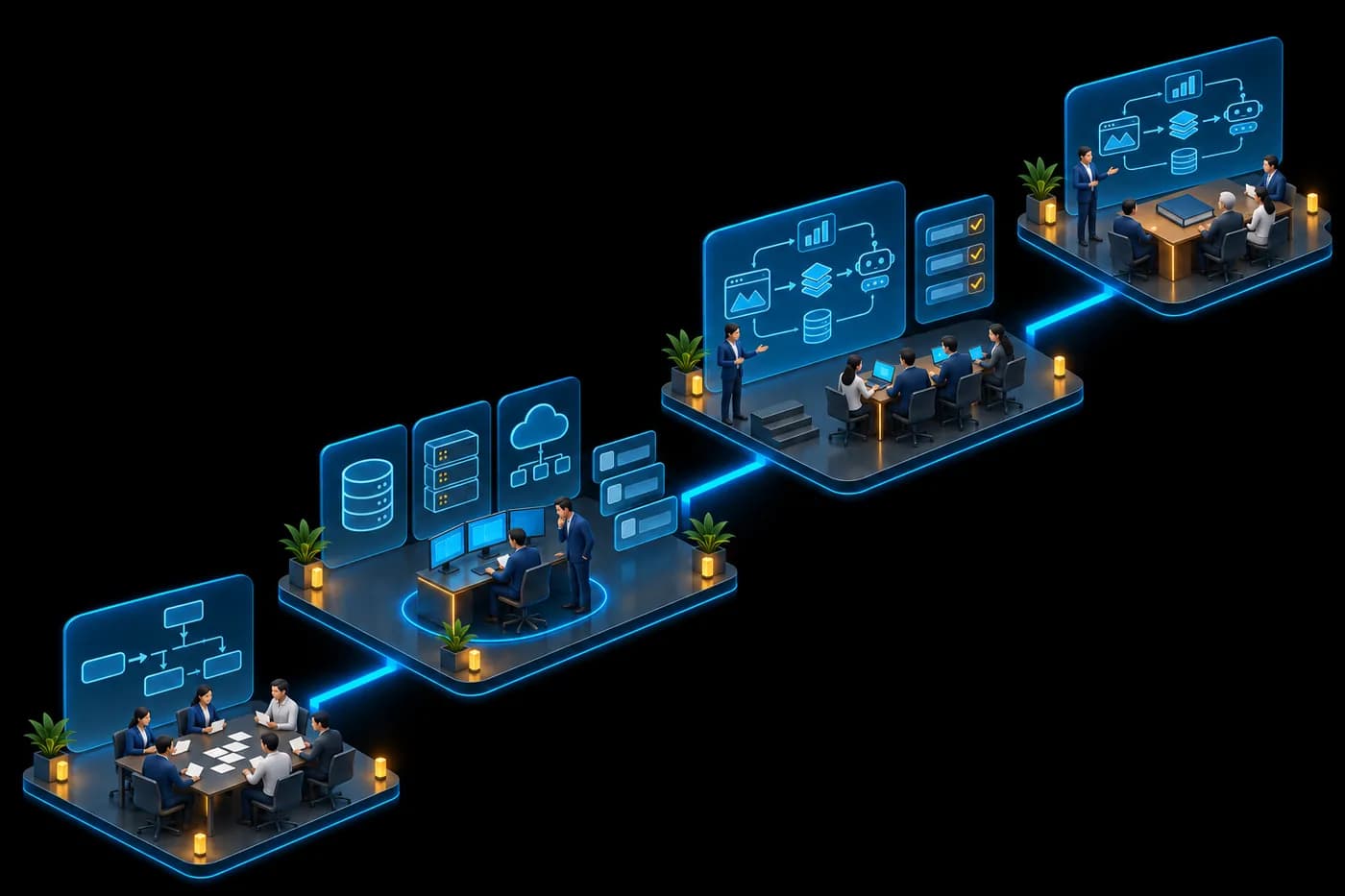
Four steps from need to plan
- DiscoveryWe talk to the business units about the need: the process, the users, expected volume and what success looks like.Business, IT and IBA
- Current StateWe review your Microsoft 365 tenant, existing licenses, environments and the systems to connect, together with your IT team. We do not ask for admin access; the review relies on information your IT team shares and joint screen-sharing sessions.IT and IBA
- Architecture and Purchase PlanWe choose the products, design the data, integration, security and environment set-up, and work out the licenses and capacity needed for the first year and for growth.IBA
- Presentation and HandoverWe present the plan to leadership and IT and hand over the architecture plan. We revise it once based on your feedback and hold a follow-up meeting.Leadership, IT and IBA
An architecture plan in six sections
- 01Architecture ViewComponents, data flow and integrations, with diagrams.
- 02Requirement–Product MappingWhich product meets each requirement, and why.
- 03Purchase PlanLicense, capacity and Copilot Credits items by user group, for the first year and for growth.
- 04Environment and Deployment PlanEnvironments, permission model, versioning and deployment.
- 05RoadmapPhases, first-release scope and estimated development effort with its assumptions.
- 06Decision and Risk LogDecisions made, open questions and risks, each with an owner.
Purchase Plan
Sample plan · fictional project
Items are filled in for your project.
Scope, involvement and who it is for
What is included?
Included- Discovery meetings
- Current-state review
- Architecture design and purchase plan
- Presentation, one revision round and a follow-up meeting
Building the solution, environment set-up, data migration, proof of concept (PoC), buying the licenses.
What we need from you
- A business representative who knows the process
- An IT representative with access to tenant and license information
- A list of the systems to connect and any existing documents
Who is it for?
- Organisations about to start a business app, automation or agent project
- Teams moving Excel, Access or a legacy application to Power Platform
- Buyers comparing supplier proposals against one architecture
- Owners of an existing app who want its architecture reviewed before it grows
The plan is yours
Your own team, IBA or another partner can build it. If you like, we take on development or support your team with training and support sessions. To review your whole Microsoft 365 and Power Platform license portfolio, see the License Value Map.
Frequently Asked Questions
The License Value Map matches your Microsoft 365 and Power Platform license portfolio with your project pool. The Solution Architecture Plan designs the components, data flow, integrations and deployment of one project you choose. You can take the two one after the other.
Yes. That is what the discovery step is for.
The plan gives suppliers a shared architecture to quote against. A fixed-price quote may also need screens, business rules and acceptance criteria; we list what is missing at handover.
The standard scope is architecture design and documentation. We flag anything that needs to be tried in practice and, if needed, scope a separate PoC.
No. We work from the information your IT team shares and from screen-sharing sessions we run together.
No. You can use the purchase plan with your current licensing partner.
We say so clearly in the plan and mark the parts that need Azure or custom development.
No. Any team that takes on development can use the plan.
Let’s plan your project
Tell us about your project in a few sentences, and we will discuss the scope and a planning timeline that suits you.